The Republic of Maldives: How the Country Is Governed
The Maldives is a presidential republic. Since the abolition of the sultanate in 1968, and especially since the landmark constitution of 2008, the country has been governed through an elected presidency, an elected parliament known as the People's Majlis, and an independent judiciary.
From sultanate to republic
The modern republic was declared on 11 November 1968, following a national referendum. Ibrahim Nasir, who had led the country to independence in 1965, became its first president. He was succeeded in 1978 by Maumoon Abdul Gayoom, whose three decades in office made him the country's longest-serving leader.
The 2008 constitution
Growing demands for reform culminated in a new constitution ratified in 2008. It introduced multi-party democracy, direct presidential elections, separation of powers, term limits and a bill of rights. The presidential election held that year was the first multi-party contest in the nation's history and produced the country's first democratic transfer of power.
The presidency
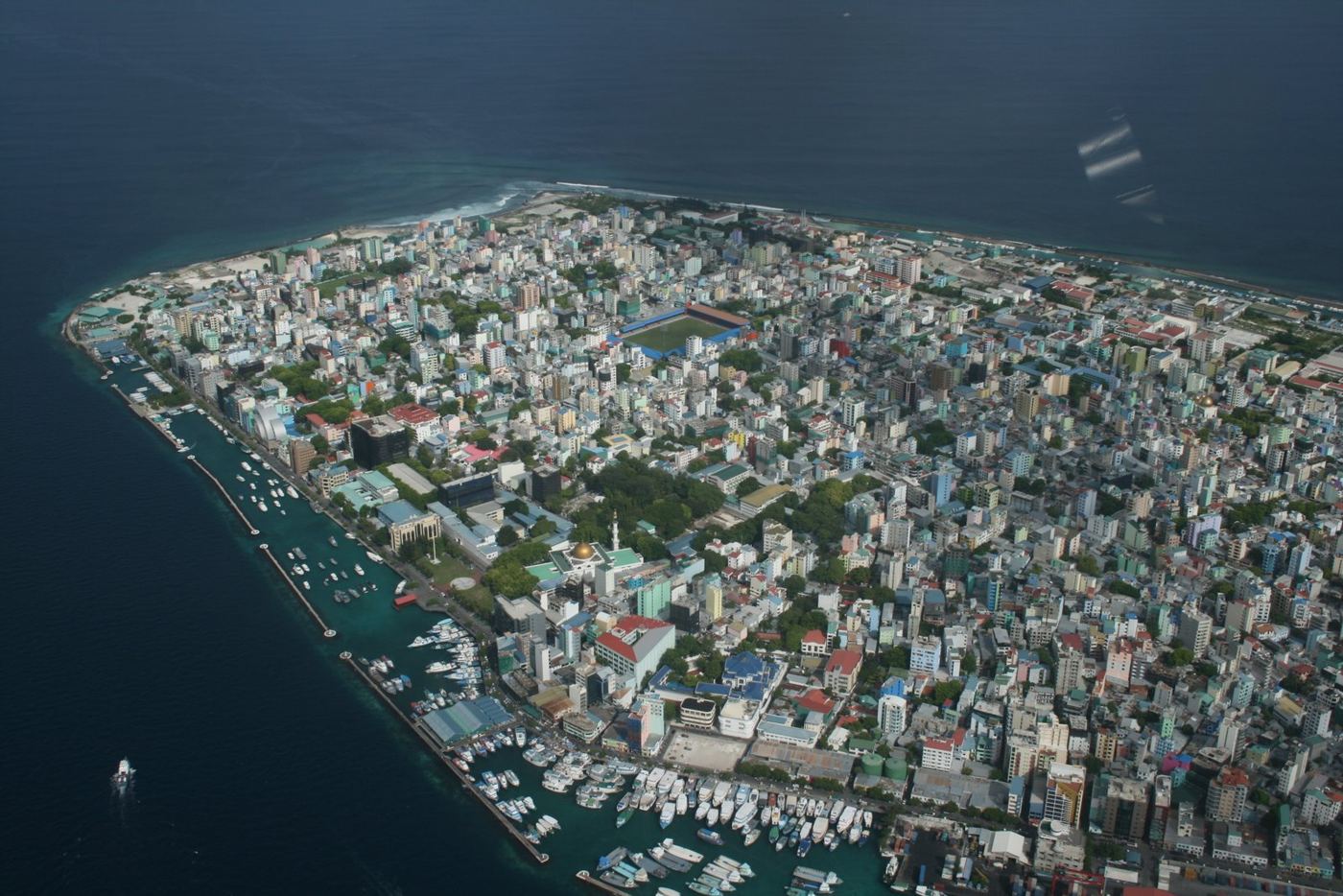
The president is head of state, head of government and commander-in-chief, elected by direct popular vote for a five-year term and limited to two terms. The president appoints a cabinet of ministers, subject to parliamentary approval, and governs from the capital, Malé.
The People's Majlis
Legislative power rests with the People's Majlis, a single-chamber parliament whose members are elected from constituencies across the atolls for five-year terms. The Majlis passes legislation, approves the budget and holds ministers to account. Its sittings are held in Malé.
Courts and law
The judiciary is headed by the Supreme Court. Maldivian law blends a civil legal framework with Islamic law, and the constitution establishes Islam as the state religion. Judicial institutions, like the rest of the state, were substantially reorganised under the 2008 constitution.
Atolls and local government
For administrative purposes the country's twenty-six natural atolls are organised into administrative atolls, each with elected councils, alongside city councils for the largest urban centres. Decentralisation legislation has given island and atoll councils responsibility for many local services, reflecting the practical reality of governing a nation spread across hundreds of kilometres of ocean.
International relations
The Maldives is a member of the United Nations and participates actively in regional and Commonwealth affairs. It has become a prominent international voice on climate change and ocean issues, reflecting its position as one of the world's lowest-lying nations.
FAQ
What type of government does the Maldives have?
A presidential republic: an elected president serves as head of state and government, with an elected parliament called the People's Majlis.
When did the Maldives become a democracy?
The 2008 constitution introduced multi-party democracy, and the first multi-party presidential election was held that year.
What is the capital of the Maldives?
Malé, which houses the presidency, the People's Majlis and the main state institutions.