A Short History of the Maldives
Scattered across the central Indian Ocean, the Maldives is one of the world's oldest continuously inhabited island nations. Its story stretches back well over two thousand years, shaped by seafarers, traders, religious transformation and, in the modern era, tourism.
Early settlement
The earliest Maldivians are believed to have arrived from the Indian subcontinent and Sri Lanka, bringing with them an Indo-Aryan language that would evolve into modern Dhivehi. The islands sat astride busy maritime trade routes linking Arabia, India, Southeast Asia and East Africa, and passing traders knew the archipelago for its cowrie shells, which were exported in enormous quantities and used as currency across parts of Asia and Africa.
The Buddhist centuries
For more than a millennium before the twelfth century, the Maldives was Buddhist. Archaeological remains — including stupa mounds known locally as havitta — survive on several islands, and copper-plate documents from the period shortly after conversion refer back to this earlier era. Buddhism left a lasting imprint on the language, place names and early written culture of the islands.
Conversion to Islam
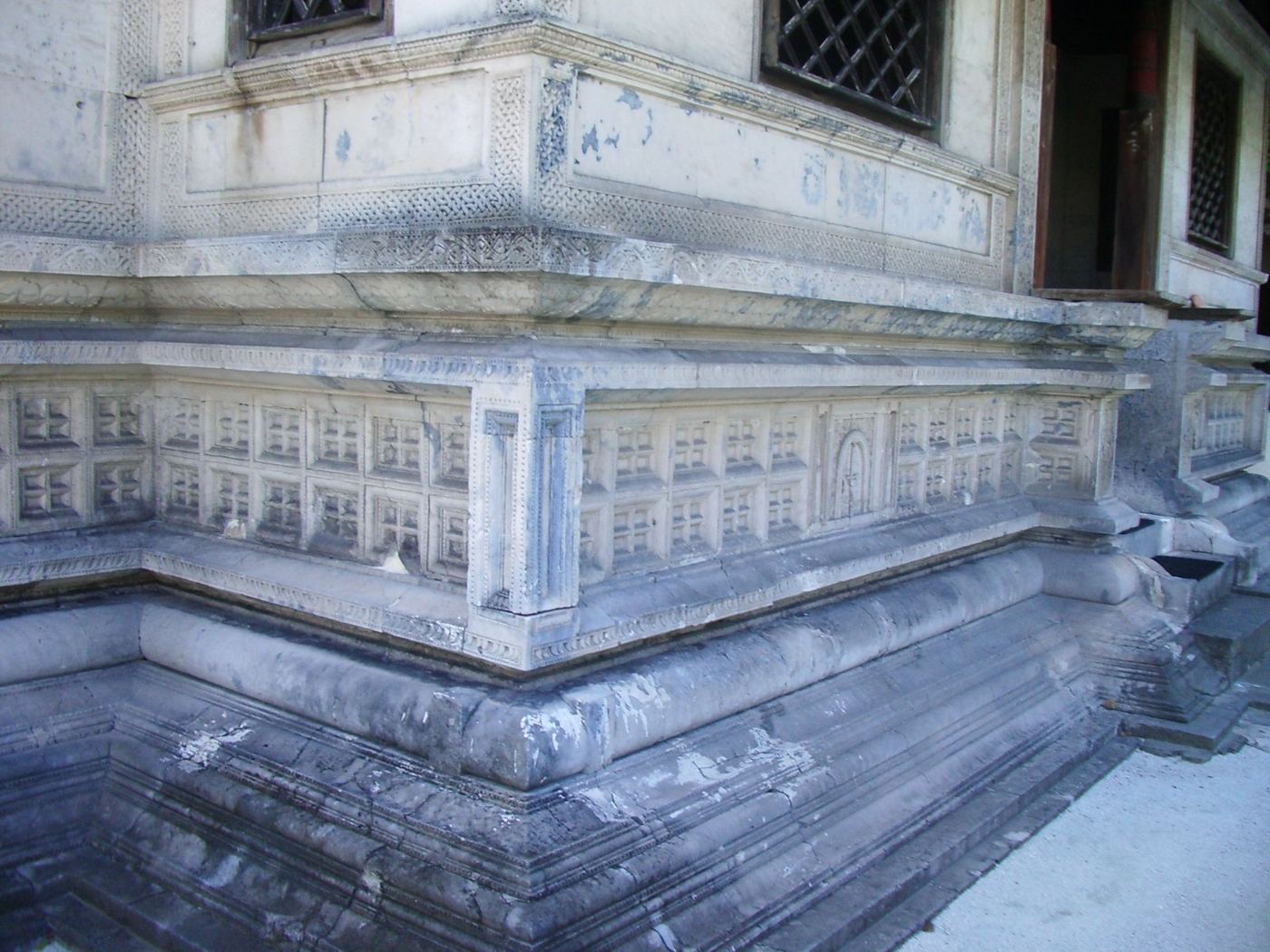
In 1153 CE the Maldivian king embraced Islam, and the country has been Muslim ever since. The conversion marks the beginning of the sultanate, a monarchy that would endure in various forms for more than eight centuries. Coral-stone mosques, some of which still stand today, are among the finest artistic legacies of the Islamic centuries.
European contact and the Portuguese episode
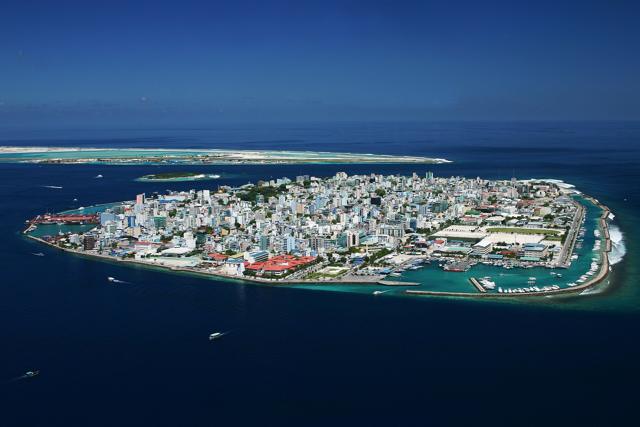
Portuguese forces occupied Malé in the sixteenth century, holding it for roughly fifteen years until 1573, when Muhammad Thakurufaanu led a successful campaign to expel them. He remains the country's most celebrated national hero, and the victory is still commemorated each year.
The British protectorate
In 1887 the sultanate entered into an agreement with Britain, becoming a protected state. Britain handled defence and foreign affairs while internal governance remained with the Maldivians. The arrangement lasted until 26 July 1965, when the Maldives regained full independence — a date now celebrated as Independence Day.
The modern republic
Following a referendum, the sultanate was abolished in 1968 and the Maldives became a republic. The final decades of the twentieth century brought profound change: the first resort opened in 1972, and tourism grew to become the largest sector of the economy, alongside the traditional fishing industry. A new constitution in 2008 introduced multi-party democracy with an elected president and parliament, the People's Majlis.
The Maldives today
Today the republic balances a globally famous tourism industry with the customs of a proudly Islamic island society. Its history — Buddhist monasteries, coral-stone mosques, colonial treaties and modern nation-building — remains visible to any visitor who looks beyond the beaches.
FAQ
How old is the Maldives as a nation?
The islands have been inhabited for well over two thousand years, and the Maldivian state traces an unbroken line from the sultanate established after the conversion to Islam in 1153 CE.
When did the Maldives become independent?
The Maldives regained full independence from Britain on 26 July 1965, having been a protected state since 1887.
Was the Maldives ever colonised?
The Maldives was never formally colonised in the way neighbouring countries were. Apart from a Portuguese occupation of Malé in the sixteenth century, it remained internally self-governing, including during the British protectorate era.