Maldivian Craftsmanship: Lacquerwork, Mat Weaving and More
Long before souvenirs, Maldivian craft served the royal court, the mosque and the household. What makes the tradition distinctive is its geography: individual islands became famous for individual crafts, developing specialised skills passed down within their communities for generations.
Lacquerwork from Thulhaadhoo
The most celebrated Maldivian craft is lacquered woodwork, known as liyelaa jehun. Artisans turn wood into boxes, vases and containers, then coat them in layers of coloured lacquer — classically red, black and yellow — before incising flowing floral patterns that reveal the colours beneath. The island of Thulhaadhoo in Baa Atoll is the historic home of this craft, and its lacquerware once furnished the sultan's court. Authentic pieces remain prized purchases today.
Thundu kunaa: the fine mats of Gadhdhoo
From Gadhdhoo in the far southern Huvadhoo Atoll come thundu kunaa — finely woven mats made from local reeds, dyed in natural tones and patterned in elegant geometric designs. Historically these mats were gifts of honour and royal tribute, and the finest examples represent hundreds of hours of work. The weave is recognised as a national heritage craft, and efforts continue to keep the skill alive among younger weavers.
Coral-stone carving
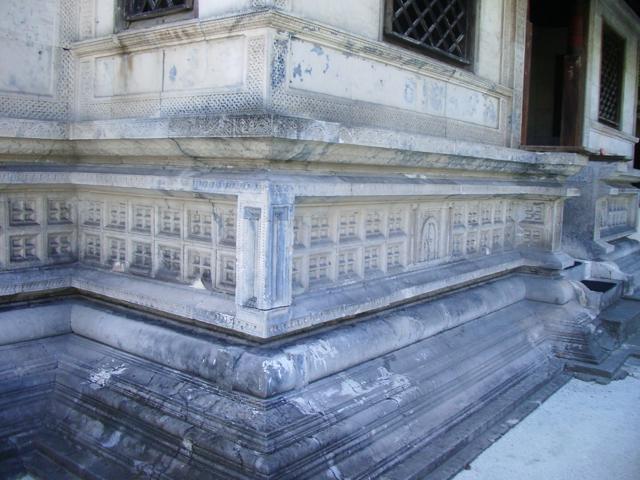
With little workable stone, early Maldivians turned to the sea itself, cutting and carving coral stone into building blocks of astonishing refinement. The great coral-stone mosques — above all the Old Friday Mosque in Malé, built in 1658 — display interlocking masonry and carved decoration regarded among the finest coral architecture anywhere. Coral quarrying is no longer permitted, making these historic structures irreplaceable.
Boatbuilding
The construction of the dhoni, the traditional wooden vessel, is itself a master craft. Builders — particularly those of Alifushi island — traditionally worked without drawn plans, shaping coconut-timber hulls by inherited knowledge and a practised eye.
Rope, jewellery and daily crafts
Coir rope twisted from coconut husk fibre was once a famous Maldivian export, valued by Indian Ocean mariners for its strength in seawater. Island smiths produced gold and silver jewellery, while everyday weaving, carpentry and thatching supplied the needs of island households.
Where to see and buy craft today
The National Museum in Malé displays historic lacquerware, mats and carvings. Craft shops in Malé and Hulhumalé, and stalls on local islands, sell contemporary work — look for genuine lacquerware and woven mats rather than imported imitations, and expect to pay accordingly for the real thing.
FAQ
What is the most famous Maldivian craft?
Lacquered woodwork (liyelaa jehun), historically centred on Thulhaadhoo in Baa Atoll.
What are thundu kunaa?
Finely woven reed mats from Gadhdhoo in Huvadhoo Atoll, historically presented as gifts of honour.
Why is coral carving no longer practised?
Coral quarrying is prohibited to protect reefs, so the surviving coral-stone mosques are treasured as irreplaceable heritage.