Manta Rays in the Maldives: Hanifaru Bay and the Great Monsoon Gatherings
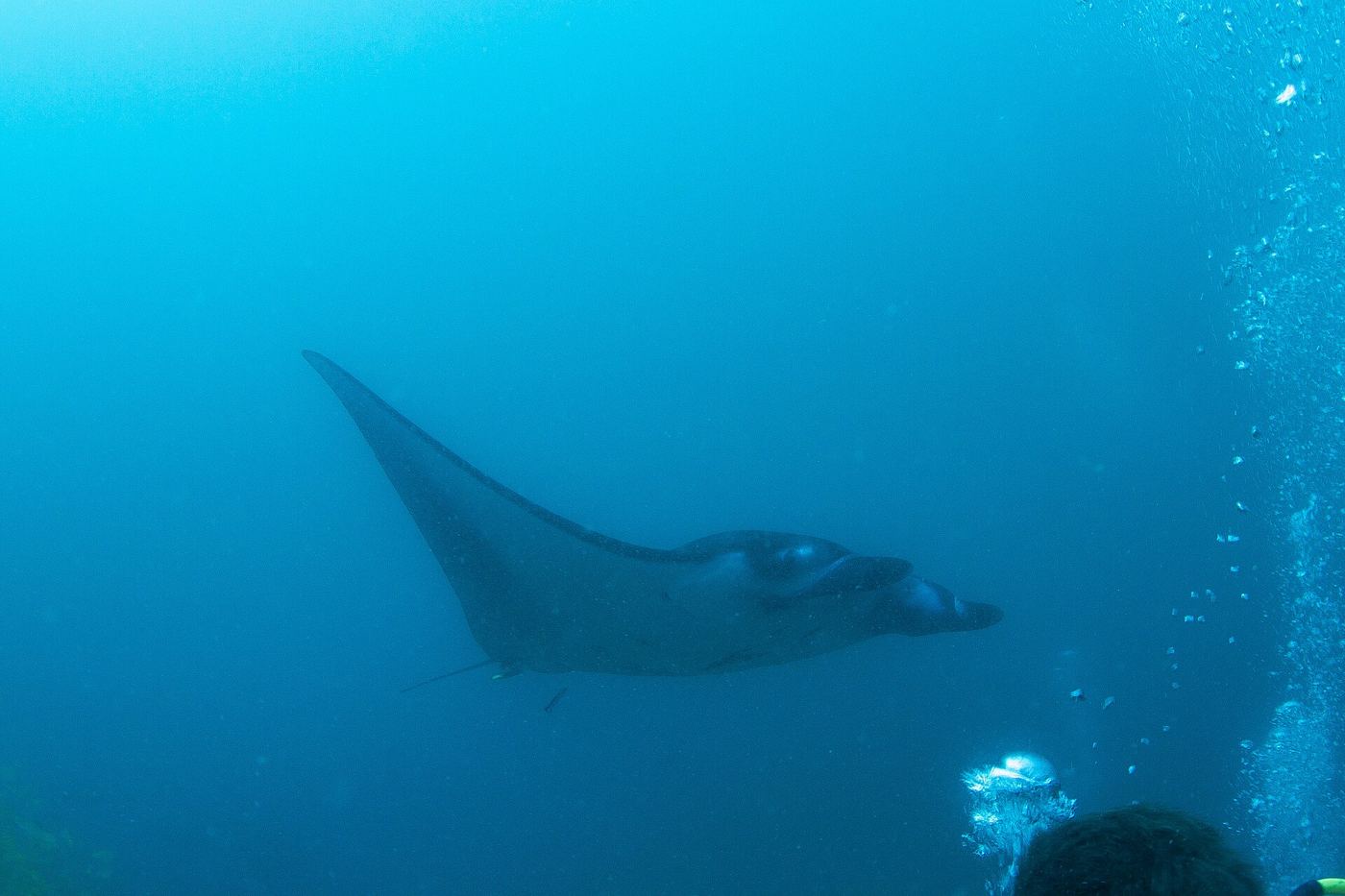
Few marine animals capture the imagination like the manta ray. Graceful, intelligent and entirely harmless, mantas glide through Maldivian waters in numbers found almost nowhere else on Earth. The Maldives is home to one of the world's largest known populations of reef manta rays, and seeing them is a highlight of any visit.
Meet the reef manta
The species most commonly seen in the Maldives is the reef manta ray. With wingspans that commonly reach three to four metres, they are among the largest rays in the ocean, yet they feed on some of its smallest creatures — zooplankton strained from the water through specialised gill plates. Like whale sharks, each manta carries a unique pattern of spots on its underside, allowing researchers to identify and track thousands of individuals across the archipelago.
Hanifaru Bay: the world-famous gathering
The most celebrated manta site in the Maldives is Hanifaru Bay, a small enclosed bay on the eastern rim of Baa Atoll, a UNESCO Biosphere Reserve. During the southwest monsoon, roughly from May or June through to November, currents and tides funnel dense clouds of plankton into the bay. When conditions align, dozens of mantas — sometimes more than a hundred — sweep into the shallows to feed together.
The spectacle includes remarkable behaviours such as chain feeding, where mantas follow one another in long loops, and cyclone feeding, where a rotating column of rays spirals through the plankton. Hanifaru Bay is strictly managed: visitor numbers are limited, snorkelling only is permitted, and licensed guides accompany every group.
Cleaning stations and year-round encounters
Outside the feeding season, mantas are most often seen at cleaning stations — coral outcrops where small wrasse pick parasites and dead skin from the rays. Mantas queue and circle over these reef 'car washes', giving divers wonderful, prolonged encounters. The mantas' movements follow the monsoons: they generally favour the western sides of the atolls during the northeast monsoon and shift east during the southwest monsoon, following the plankton.
Where else to see mantas
- Ari Atoll — reliable cleaning stations visited by divers year-round
- North Malé Atoll — well-known manta dive sites within easy reach of the capital
- Addu Atoll in the far south — known for encounters with unusually large mantas
Respecting the rays
Maldivian guidelines ask snorkellers and divers to hold their position at cleaning stations rather than swimming over the reef, to avoid touching the animals, and to let mantas control the encounter. Mantas are naturally curious and will often pass close by a calm swimmer of their own accord.
FAQ
When is manta season in the Maldives?
Mantas are present in the Maldives all year, but the famous mass feeding events at Hanifaru Bay happen during the southwest monsoon, roughly May to November. Cleaning-station encounters occur in every month.
Can you scuba dive at Hanifaru Bay?
No. To protect the feeding mantas, Hanifaru Bay is a snorkelling-only site with limited daily visitor numbers, managed as part of the Baa Atoll UNESCO Biosphere Reserve.
Are manta rays dangerous?
Not at all. Mantas have no stinging barb and feed only on plankton. They are inquisitive animals and pose no threat to swimmers, snorkellers or divers.