Coral Reefs of the Maldives Explained: How the Atolls Were Built
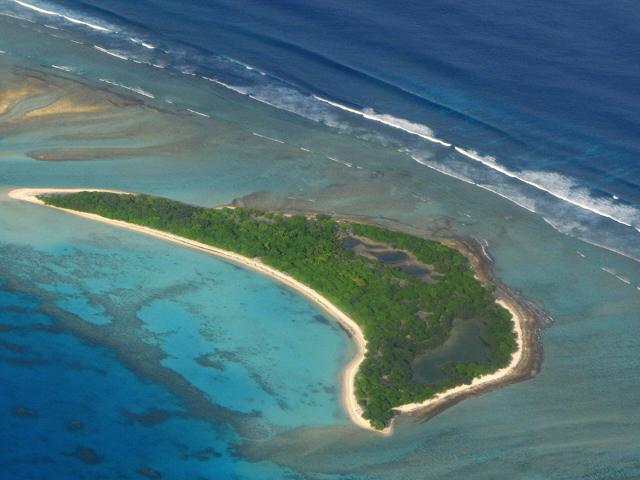
The Maldives is not a country with coral reefs — it is a country made of coral reefs. Every one of its roughly 1,190 islands, spread across 26 natural atolls, exists because countless generations of tiny coral animals built limestone structures over millions of years. Understanding the reef is understanding the Maldives itself.
How coral builds islands
Reef-building corals are colonies of small animals called polyps that secrete skeletons of calcium carbonate. Working with symbiotic algae living in their tissues — which photosynthesise and share energy with their hosts — corals slowly construct massive limestone frameworks in warm, clear, shallow water.
The classic explanation for atoll formation, first proposed by Charles Darwin, describes fringing reefs growing around volcanic islands. As the volcanoes gradually subsided beneath the sea, the corals kept growing upward toward the light, eventually leaving a ring of living reef around a central lagoon where the mountain once stood. The Maldivian atolls sit atop an ancient submerged volcanic ridge in exactly this fashion — the word 'atoll' itself entered English from the Dhivehi word 'atholhu'.
Islands of coral sand
The islands themselves are low accumulations of coral sand and rubble, built up by waves on top of the reef platforms. Much of that brilliant white sand began life as coral skeleton — a significant portion of it processed by parrotfish, which grind coral with their beak-like teeth as they graze algae and excrete fine sand. The islands are dynamic: sandbanks shift with the monsoons, beaches move seasonally from one side of an island to the other, and new sandbars appear and vanish.
The house reef
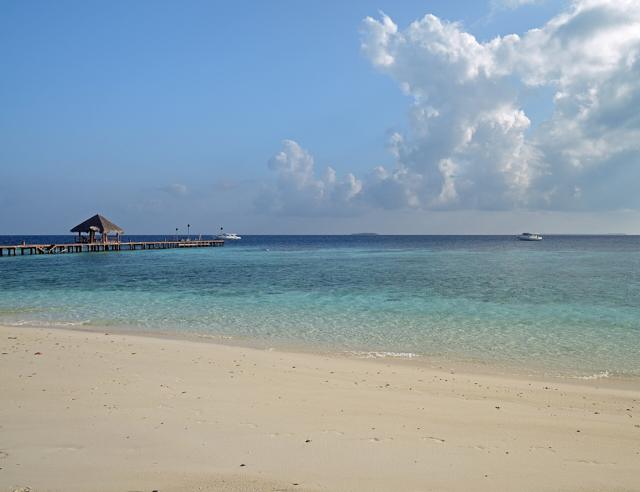
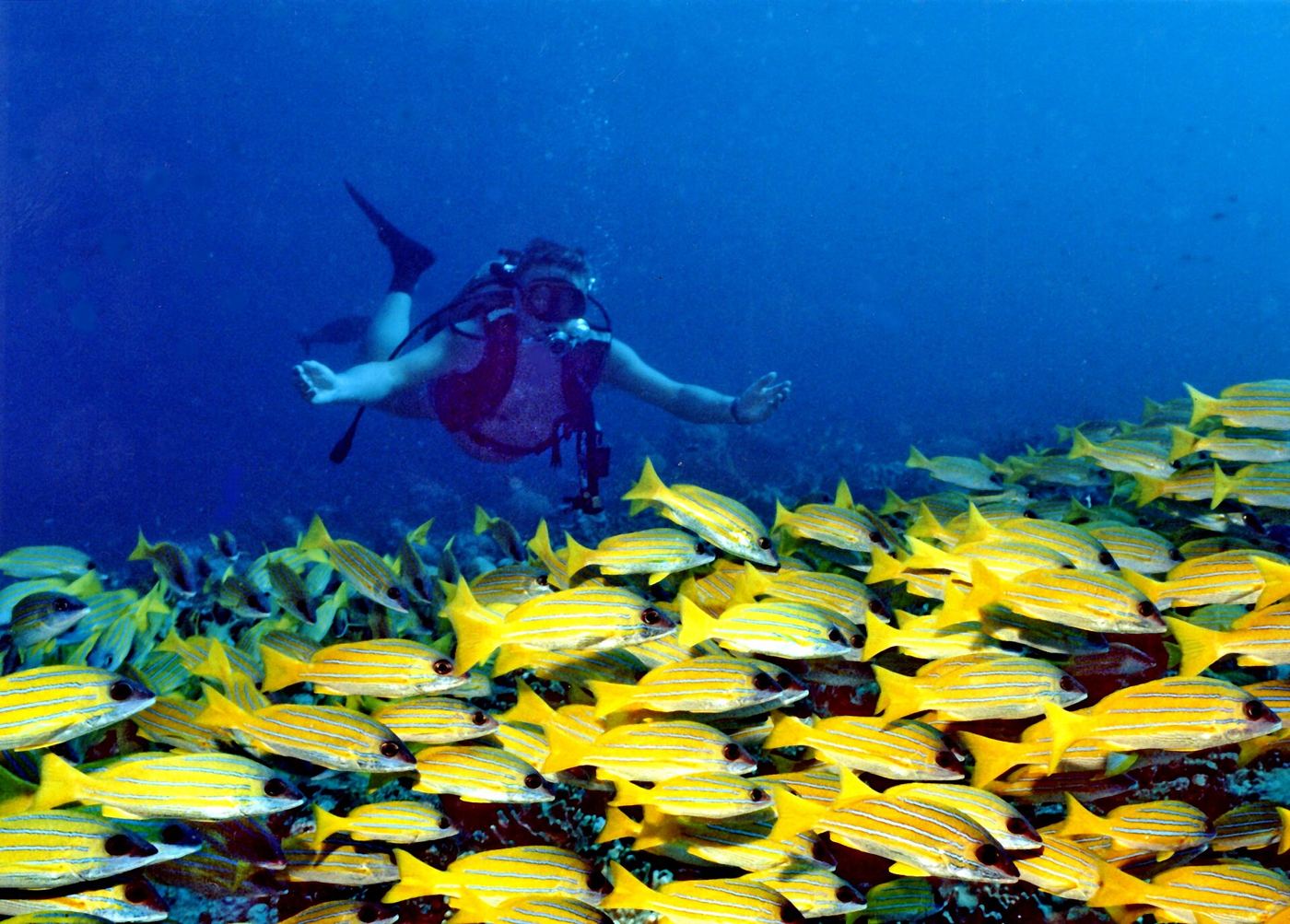
Many Maldivian islands are ringed by their own 'house reef' — a coral wall just offshore, often only a short swim from the beach. A good house reef functions like a private aquarium: turtles, reef sharks, rays, moray eels and hundreds of fish species live within metres of the shore. For snorkellers, a strong house reef is often worth more than any excursion.
What the reef provides
- Protection: reefs absorb wave energy and shield the low-lying islands from storms and erosion
- Food: reef fisheries have sustained Maldivians for centuries
- Livelihoods: tourism and diving, the heart of the economy, depend directly on healthy coral
- The islands themselves: without living reefs producing sand, the islands cannot naturally maintain themselves
Reefs under pressure
Maldivian reefs have endured serious coral bleaching events driven by unusually warm seas, along with local pressures from construction and dredging. Encouragingly, many reefs have shown a real capacity to recover, and coral restoration projects now operate across the archipelago. Visitors help by choosing reef-safe sunscreen, never standing on coral, and supporting operators who take conservation seriously.
FAQ
Why is the water so clear in the Maldives?
The islands sit in the open Indian Ocean far from continental rivers, so there is very little sediment or nutrient runoff. Clear, nutrient-poor water is exactly what reef-building corals need to thrive.
What is a house reef?
A house reef is the coral reef immediately surrounding an island, usually accessible straight from the beach. Islands with good house reefs offer world-class snorkelling without needing a boat.
Are the Maldives' reefs still worth seeing?
Yes. While bleaching events have damaged some areas, the Maldives still holds vast, vibrant reef systems, and many sites — particularly protected areas and strong house reefs — remain spectacular.