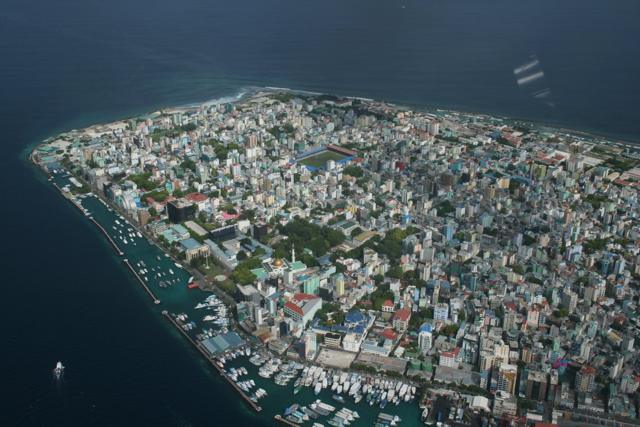
Malé City Guide: The Compact Capital of the Maldives
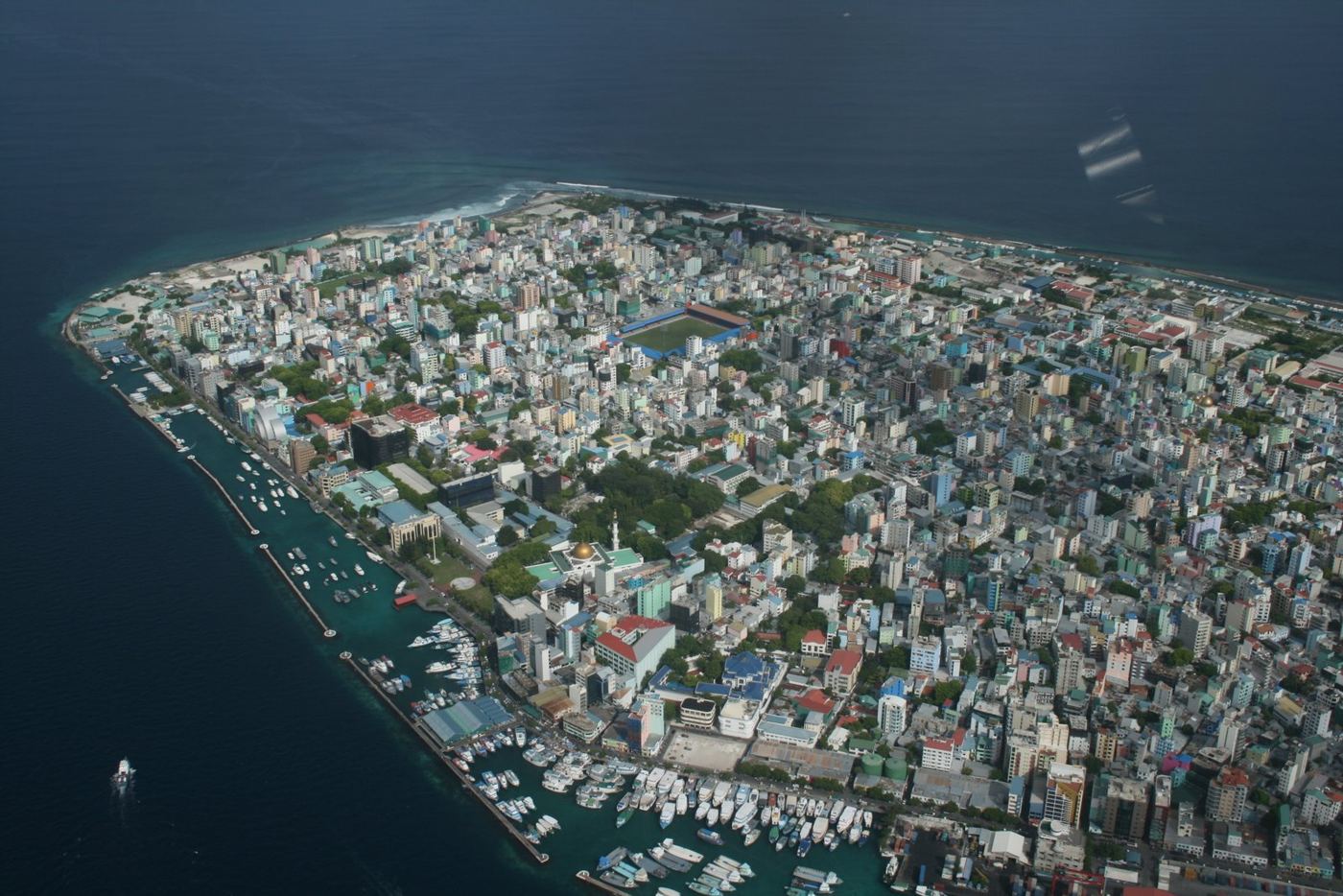
Malé is the capital and most populous city of the Maldives, and it is unlike anywhere else in the country. While the archipelago is famous for empty beaches and quiet lagoons, Malé is a compact grid of colourful mid-rise buildings, narrow streets and constant motion, squeezed onto an island of roughly two square kilometres in the south of North Malé Atoll.
A city of remarkable density
More than a third of the entire Maldivian population lives in the greater Malé area. Because the island is fully built out, Malé consistently ranks among the most densely populated cities in the world. Land scarcity has pushed the city upwards and outwards: reclaimed land and the neighbouring artificial island of Hulhumalé, connected by the Sinamalé Bridge, now absorb much of the capital's growth.
A brief history
Malé has been the seat of Maldivian rulers for centuries. The old royal palace and most of the historic forts and bastions were demolished in the decades after the sultanate ended, but important monuments survive. The Friday Mosque, known as Malé Hukuru Miskiy, was completed in 1658 and is celebrated for its intricate coral stone carving, a craft unique to the region. It has been on the UNESCO tentative list for its coral stone architecture.
What to see
Mosques and monuments
The Islamic Centre, with its striking golden dome, dominates the skyline near the harbour and houses one of the largest mosques in South Asia. The Hukuru Miskiy old Friday Mosque, the adjacent Munnaaru minaret and the tombs of national heroes give a sense of the city's long Islamic heritage.
Markets
The fish market on the northern waterfront is the city's beating heart. Skipjack and yellowfin tuna, the staples of Maldivian cuisine, arrive through the day on dhonis, the traditional boats of the islands. The nearby local market sells tropical produce, dried fish, coconuts and sweet treats from across the atolls.
Other landmarks
- Sultan Park and the National Museum, on the grounds of the former royal palace
- Republic Square near the harbour front
- The Tsunami Monument, commemorating the 2004 Indian Ocean tsunami
- Artificial Beach, a small swimming spot on the eastern edge of the city
Practicalities
Malé sits a short distance from Velana International Airport, which occupies the separate island of Hulhulé. Frequent ferries and the bridge link the airport, Hulhumalé and the capital. Most international visitors pass through quickly on their way to resorts, but a half-day walking tour of Malé offers something no resort can: a look at everyday Maldivian urban life.
As everywhere in the Maldives, Islam shapes daily rhythms. Visitors should dress modestly in the city, and alcohol is not available in Malé or on any inhabited local island.
Sightseeing in Malé
Most visitors see Malé only from a seaplane window, but the Maldivian capital rewards a few hours of exploration. Occupying an island of roughly two square kilometres in North Malé Atoll (Kaafu), it is one of the most densely populated cities on earth, with a significant share of the country's population packed into a grid of colourful mid-rise buildings, narrow streets and busy harbours. It is the political, commercial and cultural heart of the nation, and utterly different from the resort islands around it.
Key sights
- Old Friday Mosque (Hukuru Miskiy): the city's most treasured building, constructed in 1658 from carved coral stone, with intricate lacquer work and Arabic calligraphy inside. Its coral-stone craftsmanship is recognised as a masterpiece of Indian Ocean architecture.
- Grand Friday Mosque and Islamic Centre: opened in 1984, its golden dome dominates the skyline, and its main hall accommodates thousands of worshippers.
- National Museum: houses royal artefacts, thrones, lacquerware and pre-Islamic exhibits tracing the country's Buddhist past.
- Sultan Park: a green space on the grounds of the former royal palace.
- Republic Square and the waterfront: flag, ferries and the pulse of the harbour.
- The fish market and local market: the liveliest corner of the city, where tuna landed that morning is sold and butchered with remarkable speed, alongside produce from across the atolls.
The feel of the city
Malé is compact enough to walk across in well under an hour, though scooters flood the streets at rush hour. Cafes serve strong coffee and Maldivian short eats; shops sell everything from fishing gear to smartphones. There are no beaches suitable for swimming on the main island itself, and the city observes Islamic norms: modest dress applies, and alcohol is not available anywhere in Malé.
Visiting practicalities
Malé sits a short ferry or speedboat hop from Velana International Airport on the neighbouring island of Hulhulé. Many travellers slot in a Malé visit before a domestic transfer or on the way home. Guided walking tours run from the jetties, or you can wander independently; the grid layout makes it hard to stay lost for long. Non-Muslims should note that mosque interiors, including Hukuru Miskiy, are generally visitable only with permission or a guide and outside prayer times, with appropriate dress.
FAQ
Is Malé worth visiting?
Yes, for a short visit. The mosques, markets and museum can be seen comfortably in half a day and provide cultural context that resort islands do not.
How do you get from the airport to Malé?
The airport sits on a separate island connected to Malé by the Sinamalé Bridge and by frequent public ferries; the crossing takes only minutes.
Can you drink alcohol in Malé?
No. Alcohol is prohibited on all inhabited local islands including the capital, and is served only on licensed resort islands and liveaboard vessels.