Common Reef Fish of the Maldives: A Snorkeller's Who's Who
Drop your mask under the surface of any healthy Maldivian reef and the sheer variety of fish can overwhelm you — hundreds of species share a single house reef. Learning even a dozen of the regulars transforms snorkelling from pretty chaos into a story you can read. Here are the characters you are almost guaranteed to meet.
The unmistakables
Parrotfish: Big, vivid and busy, parrotfish crunch algae — and some coral — with fused, beak-like teeth. You can literally hear them feeding. The sand they excrete after grinding coral contributes generously to those white beaches.
Napoleon wrasse: The giant of the reef, growing well over a metre, with fleshy lips and a distinctive hump on its forehead. Often curious about divers, individual 'Napoleons' become famous residents at certain sites.
Moorish idol: The elegant black, white and yellow banner-bearer with a trailing dorsal filament — one of the most photographed fish on any reef.
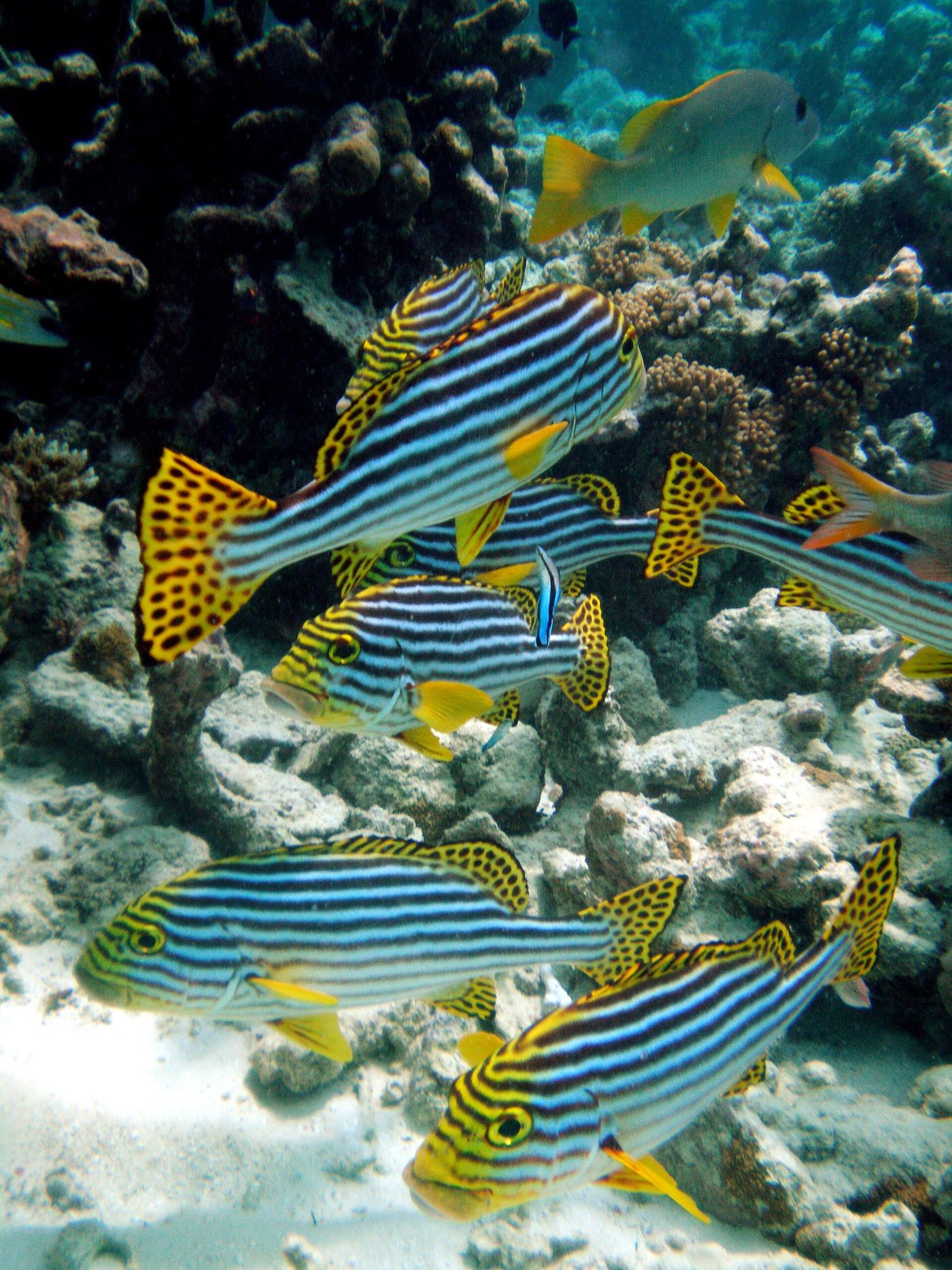
Oriental sweetlips: Boldly striped in black and white with yellow fins, sweetlips hover in patient groups under overhangs, lips pursed as the name suggests.
Small and dazzling
Clownfish (anemonefish): The Maldives has its own special — the Maldive anemonefish, found nowhere else on Earth — living in stinging anemones that other fish avoid. Whole families guard their anemone fiercely, retreating into its tentacles when you drift close.
Butterflyfish: Delicate, disc-shaped and often travelling in faithful pairs, dozens of butterflyfish species patrol Maldivian reefs, picking at coral polyps.
Angelfish: Larger and more flamboyant, including the royal angelfish and emperor angelfish, whose blue-and-yellow patterning looks hand-painted.
Damselfish and chromis: The clouds of small blue-green fish shimmering above coral heads, ducking into the branches as one when a predator passes.
Characters with reputations
Titan triggerfish: A robust, powerful fish that excavates nests in the sand during breeding season and defends them boldly — give a nesting triggerfish a wide berth and swim around, not over, its territory.
Moray eels: Peering from crevices with mouths agape (that is how they breathe, not a threat display). Honeycomb and giant morays are common residents.
Pufferfish and porcupinefish: Slow, endearing and best left unstressed — their famous inflation is a costly defence, not a party trick.
Out over the sand and blue
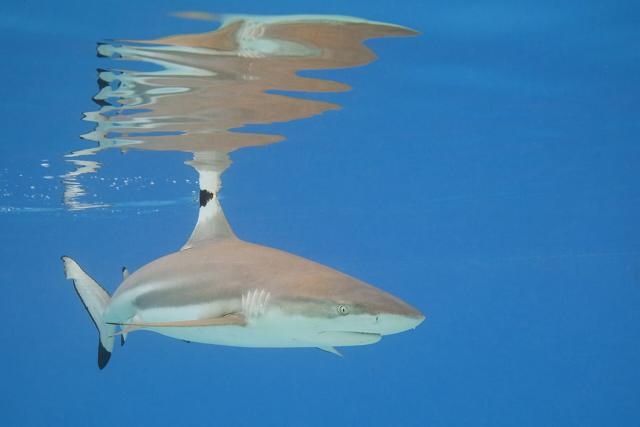
Goatfish whisker through the sand, stingrays settle into it, eagle rays fly along the reef edge, and schools of fusiliers and snappers stream past in the current. Where the reef drops into blue water, keep an eye out for trevally and barracuda — silver hunters patrolling the boundary.
FAQ
Which fish is unique to the Maldives?
The Maldive anemonefish — a clownfish species found only in the Maldives (and nearby Sri Lankan waters by some accounts) — is the archipelago's own endemic celebrity, common on anemones across the atolls.
Are any reef fish dangerous to snorkellers?
Very few. The main ones to respect are nesting titan triggerfish (keep your distance), lionfish and stonefish (venomous spines — don't touch anything), and moray eels (never put hands in crevices). Observation without touching keeps everyone safe.
How many fish species live on Maldivian reefs?
Surveys have recorded over a thousand fish species across the Maldives' reefs and surrounding waters — one reason every snorkel reveals something new.