Artificial Islands and Land Reclamation in the Maldives
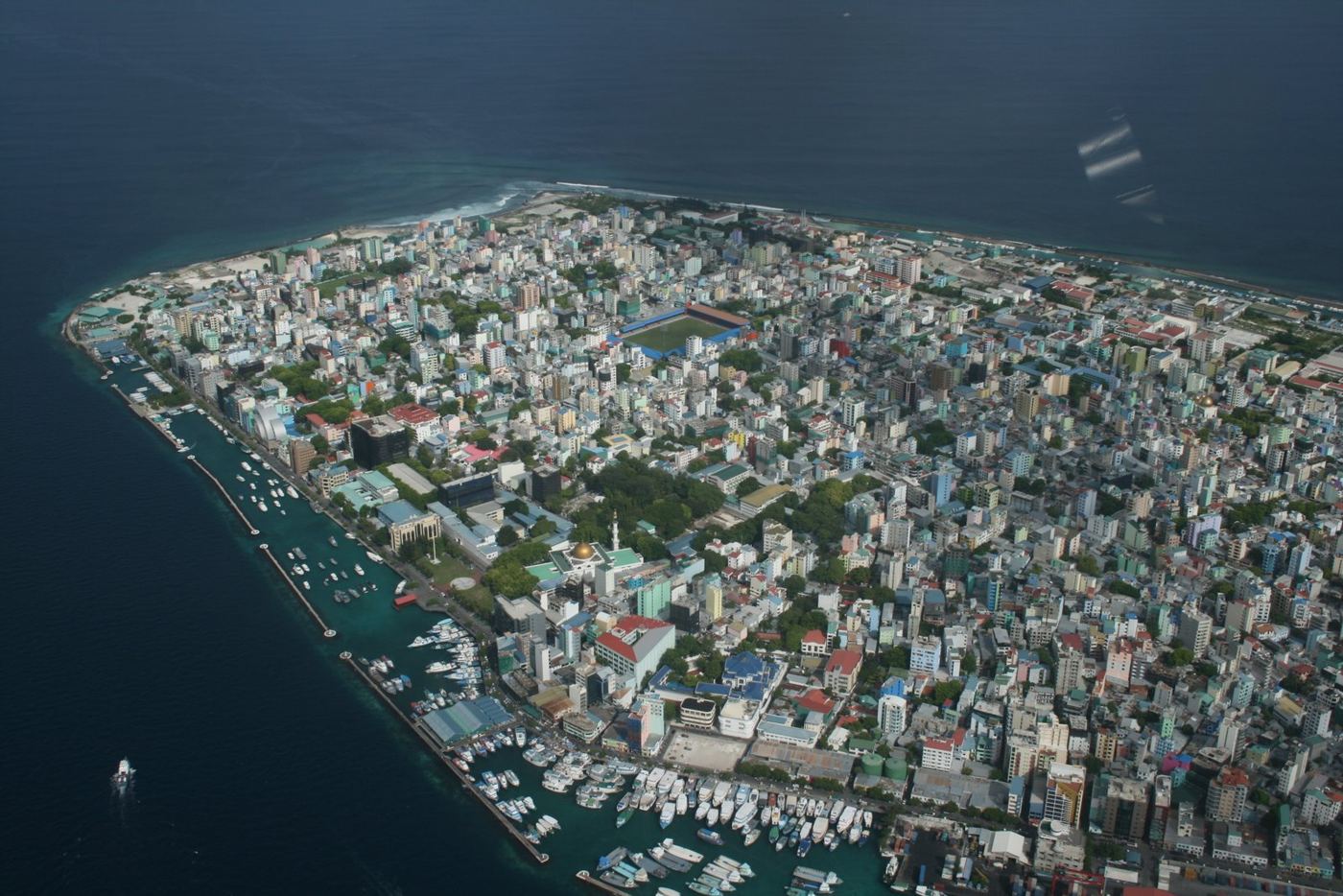
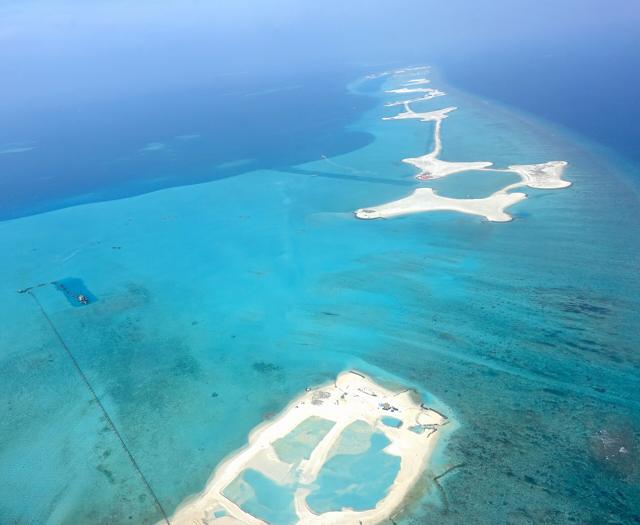
For most of history, only corals and currents made land in the Maldives. Today, dredging ships share that job. Land reclamation — pumping sand from lagoon floors onto reef flats to create or enlarge islands — has become one of the defining activities of the modern Maldivian state, driven by a simple arithmetic: half a million people, a growing economy, and about 300 square kilometres of natural land, almost all of it barely above the sea.
How islands are made
Reclamation typically works by cutting sand from deeper lagoon areas with a dredger and discharging it onto a shallow reef flat until the surface rises above high tide. The new ground is compacted, edged with revetments or sea walls, and left to consolidate before construction. Because the material is loose carbonate sand, coastal armouring is usually essential to keep the engineered shoreline in place.
The flagship projects
Hulhumalé
The best-known made island, reclaimed beside the airport from the late 1990s and settled from 2004, was deliberately built to roughly two metres above sea level — higher than most natural islands — and now houses tens of thousands of people in a planned city, with a second phase dominated by high-rise public housing.
Airports and harbours
Velana International Airport has grown through successive reclamations, and regional airports across the atolls stand largely on made land. Harbour basins and quay walls on inhabited islands are the most widespread small-scale form of the same engineering.
Housing and industry
Projects have added residential land beside crowded islands, created the industrial island of Thilafushi on a former lagoon — long controversial for its role as a waste site — and continue with new schemes around the Greater Malé region and the atolls.
The environmental ledger
Reclamation's costs are real and debated:
- Dredging and sediment plumes can smother nearby corals and seagrass meadows
- Natural sand-sharing between reef, beach and island is interrupted by hard edges
- Lagoon habitats are converted permanently to dry land
Supporters answer that raised, planned islands are climate adaptation — safer ground for a population that must live somewhere — and that concentrating development spares other islands. Environmental assessments are required, and the tension between protection and provision runs through Maldivian politics.
What it means for the future
The Maldives will keep making land; the questions are where, how high, and at what ecological price. In a nation whose natural islands were built by living reefs, the health of those reefs and the ambitions of the dredgers are now permanently intertwined.
FAQ
Which Maldivian islands are artificial?
Hulhumalé is the largest purpose-built island; Thilafushi, airport islands and many harbour extensions are also reclaimed, and numerous inhabited islands have been enlarged.
Why does the Maldives reclaim land?
Housing shortages, infrastructure needs and climate adaptation — engineered islands can be built higher than natural ones.
Is reclamation bad for reefs?
It can be: dredging and sedimentation damage corals and seagrass, which is why projects require environmental assessment and mitigation.