Hanifaru Bay Explained: Inside the World's Most Famous Manta Feeding Station
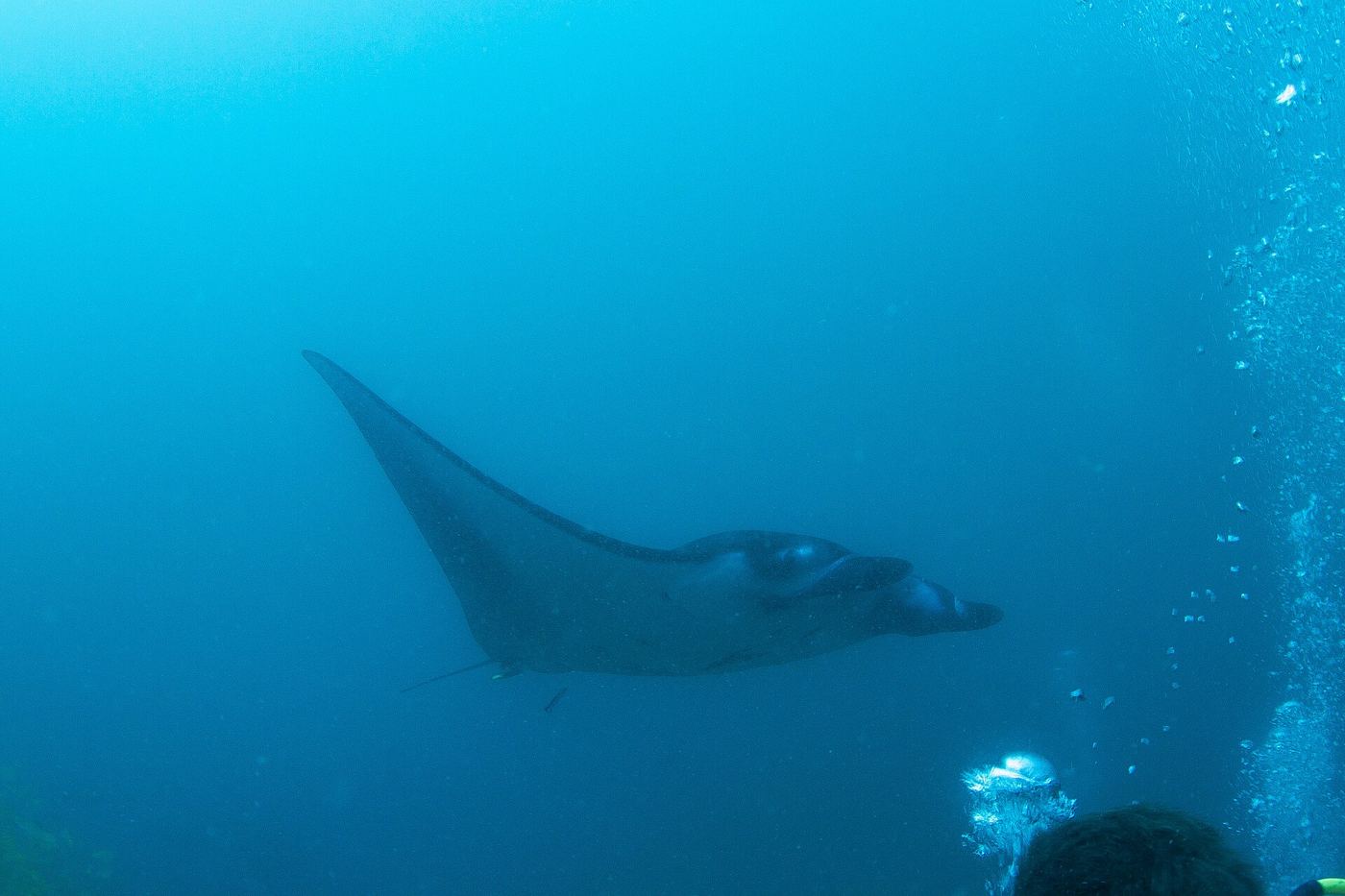
Hanifaru Bay is a small, funnel-shaped lagoon on the eastern rim of Baa Atoll, beside the uninhabited island of Hanifaru. For most of the year it is an unremarkable pocket of turquoise. But during the south-west monsoon, an accident of shape, tide and current turns it into one of the most extraordinary feeding arenas in the ocean — the phenomenon at the heart of Baa Atoll's UNESCO Biosphere Reserve status.
How the trap works
From roughly May or June to November, the south-west monsoon drives plankton-rich water from the open ocean against Baa Atoll's eastern edge. When lunar tides push against that prevailing flow, plankton concentrates and is funnelled into Hanifaru's cul-de-sac, where the bay's shape prevents easy escape. Densities build until the water itself turns soupy — and reef manta rays arrive to harvest it.
What a big day looks like
On peak days, dozens and sometimes hundreds of mantas feed in the small bay, barrel-rolling through plankton clouds, chaining head-to-tail, and spiralling in cyclone formations that scientists consider among the largest manta feeding aggregations known anywhere. Whale sharks, the ocean's biggest fish, sometimes join, sieving the same broth.
Rules that keep it alive
Fame nearly loved the bay to death, and the reserve now enforces strict management:
- Snorkelling only — scuba diving inside the bay is prohibited
- Limited visitor numbers and time slots, supervised by rangers
- Licensed guides and boats only, with entry fees supporting the reserve
- No touching or chasing; swimmers keep to guided areas
Encounters are managed to stay on the mantas' terms, and the animals' return year after year suggests the model works.
Planning an encounter
Timing is probabilistic: activity clusters around new and full moon tidal phases within the season, peaking roughly August to October, but plankton and mantas obey conditions, not calendars. Staying several days in Baa Atoll — at a resort or on nearby local islands such as Dharavandhoo, a few minutes' boat ride away — gives rangers and guides time to catch the bay switching on.
FAQ
When do mantas gather in Hanifaru Bay?
During the south-west monsoon, roughly May or June to November, with peak events typically August to October around spring tides.
Can you scuba dive Hanifaru Bay?
No. Only ranger-supervised snorkelling is permitted; diving inside the bay was banned to protect the aggregation.
How many mantas appear at once?
Ordinary days may bring a handful; exceptional plankton events have drawn well over a hundred mantas into the bay at once.